
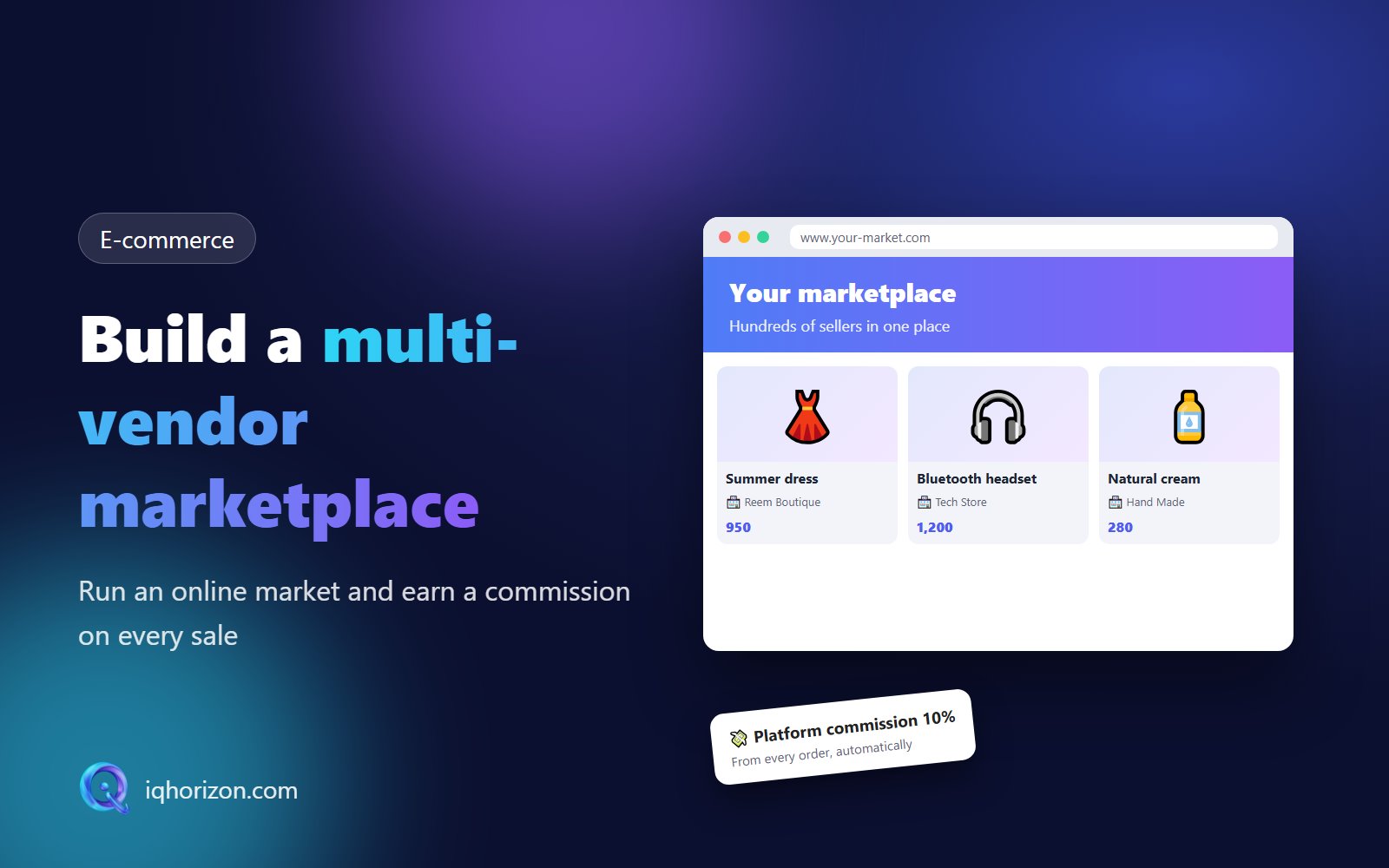
A normal online store sells only its owner's products. A multi-vendor marketplace is a full market: many vendors list their products, customers buy from one place and the platform owner earns a commission on every sale. A powerful idea, but it needs the right system behind it.
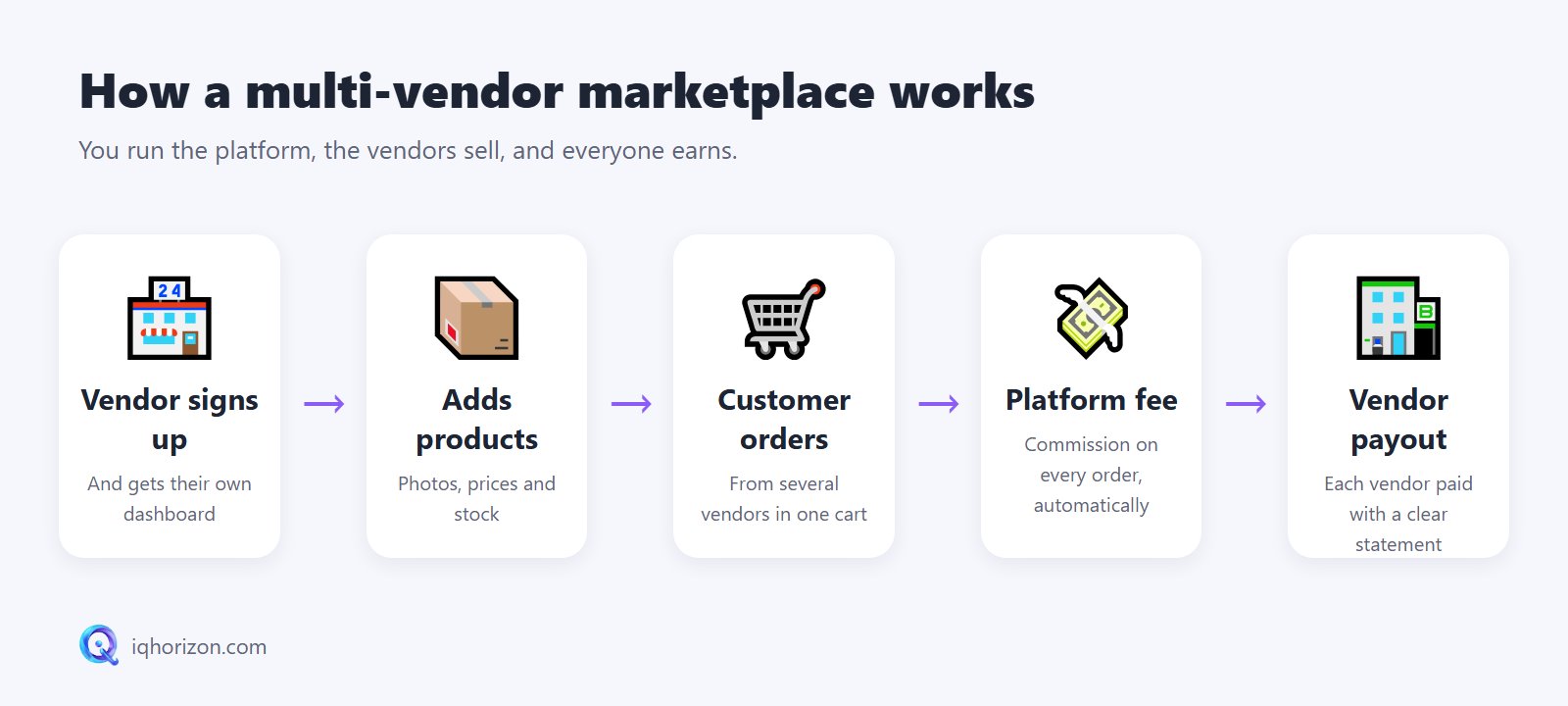
1. Vendor sign-up and approval
Vendors register their details and you review and approve them. This keeps the quality of the market and the trust of your customers.
2. A dashboard for every vendor
Each vendor manages their own products with photos, prices and stock, and sees their orders, sales and earnings. You never have to work on anyone's behalf.
3. One cart, several vendors
A customer can buy from three vendors in one order. The system splits the order and each vendor sees only their part.
4. Platform commission
This is how you earn: a percentage of each sale, a monthly vendor subscription, or both. Commission should be calculated automatically and can differ by category or vendor.
5. Payment and shipping
Cash on delivery or online payment, shipped by the vendor or from your warehouse. All of it must be clear to the customer at checkout.
6. Payouts and returns
Each vendor is paid after commission with a clear statement. For returns, the system must refund the customer and adjust the vendor's balance.
7. Coupons and offers
Platform or vendor coupons and seasonal campaigns drive sales and keep vendors engaged.
Tip: start with a small number of good vendors in one niche and focus on quality and delivery. Reputation matters more than numbers at the start.
Summary
A multi-vendor marketplace is a big, profitable project when it runs on a system that handles vendors, orders, commission and payouts. Have an idea for one? Send us the details or see our products.