
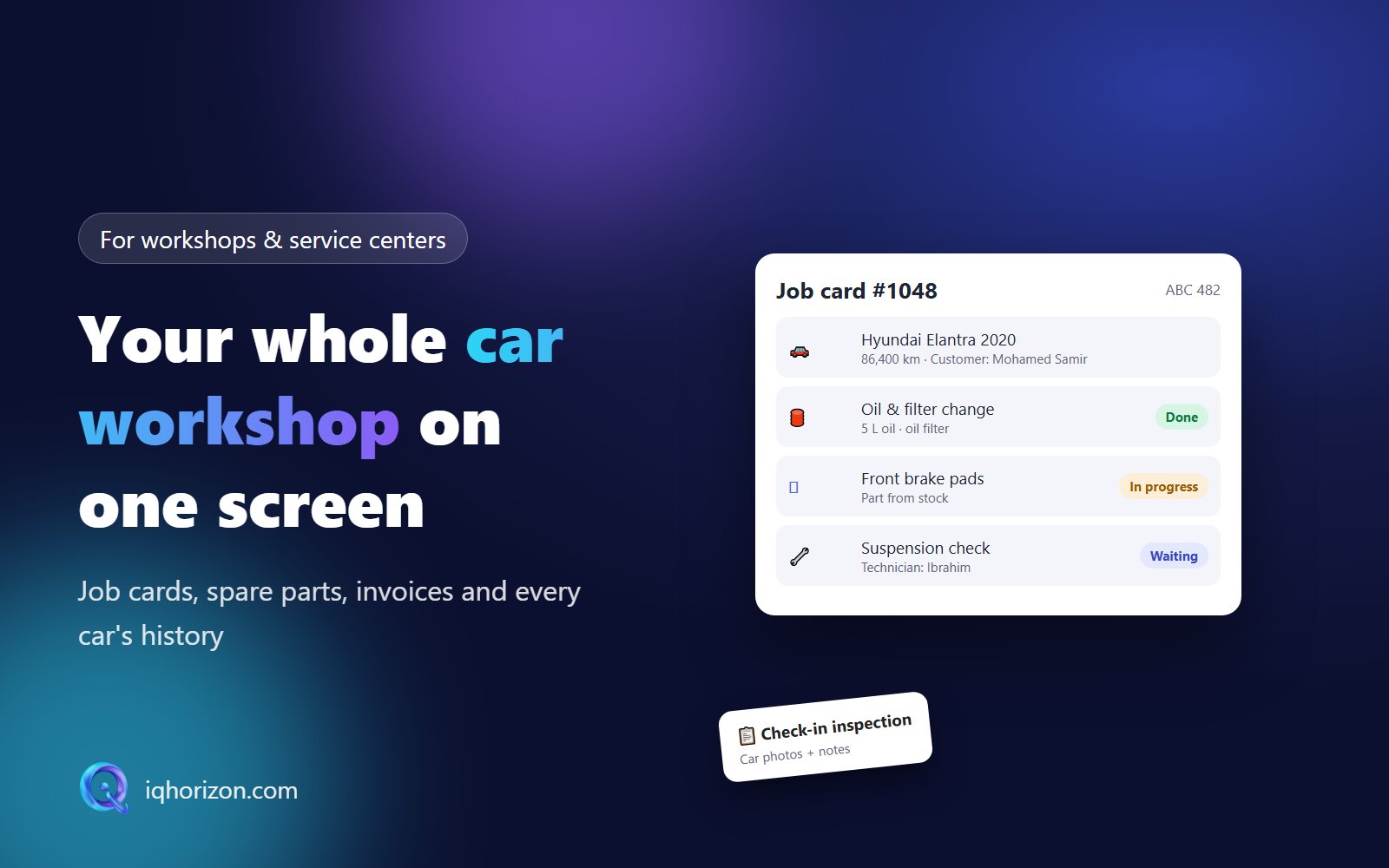
A car service center has a lot going on at once: cars coming in and out, technicians working on several cars, parts being issued and customers calling for updates. If all of that runs on paper and phone calls, money is slipping away without you noticing.
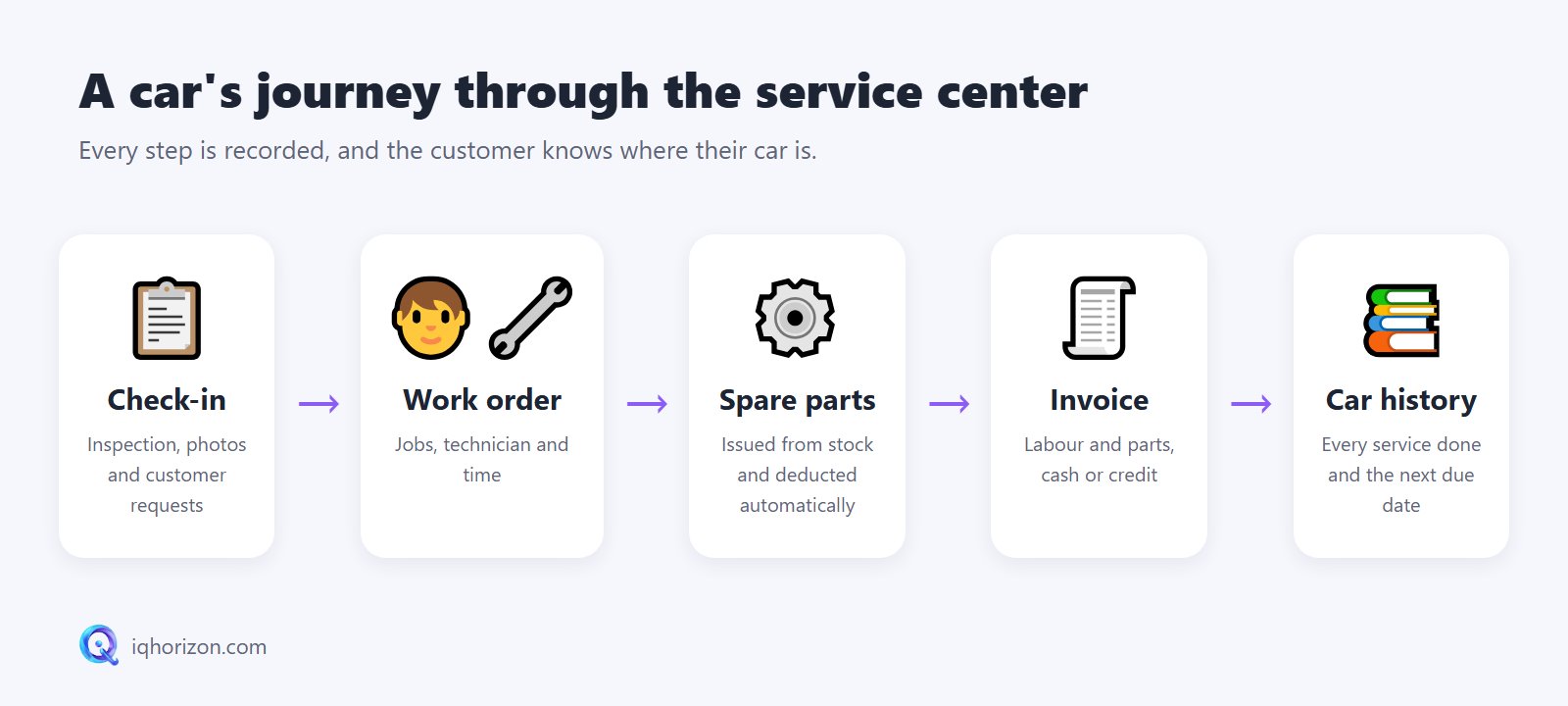
1. Check-in inspection
As soon as the car arrives, record its condition: mileage, fuel, scratches and the customer's requests, with photos. This protects you from disputes later and gives the customer confidence from the first minute.
2. A clear work order
Each car gets a work order with the jobs, the responsible technician and the status of each item (waiting, in progress, done). The workshop manager sees every car on one screen and knows who is late and why.
3. Spare parts from stock
Every part issued is recorded on the work order and deducted from stock. That closes the door to losses and tells you when to reorder and which parts move fastest.
4. An accurate invoice
Labour and parts on one clear invoice, paid now or on account. Fleet companies and regular customers get their own account with balances and payments.
5. Service history for every car
When the customer comes back, you know everything done before, at what price, and when the next oil change is due. Send a reminder and they will most likely come back to you, not another garage.
6. Technician tracking
Each technician has work orders in their name, so you can see who is fastest and who is overloaded, and calculate bonuses on real work.
7. Workshop reports
Daily and monthly revenue, the most requested jobs, parts profit and cars still in the workshop: numbers that help you grow with confidence.
Tip: start with work orders and stock. Once they are in order, you will see the difference in your numbers within the first month.
Summary
Good workshop software links check-in, work orders, stock and invoices, and keeps the history of every car. Want to see it with your own workshop? Request a free trial or contact us.